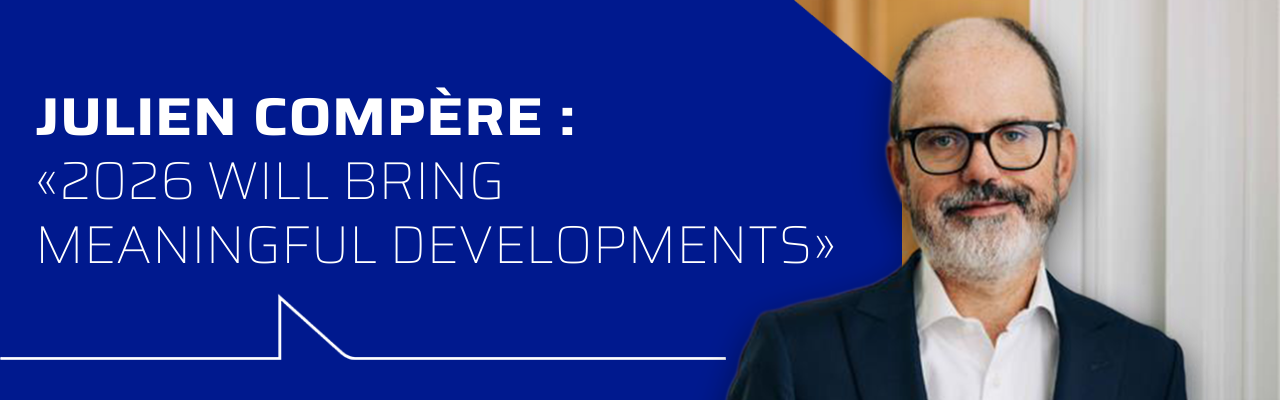
Q1. For FN Browning Group, if you had to summarise 2025 in one defining aspect, what would it be?
2025 was a year of strategic consolidation. The acquisition of the French group Sofisport marked a historic milestone for our Group. It strengthened our position among the global leaders and expanded our industrial footprint to more than 20 production sites across nine NATO countries, including six EU Member States, with more than 4,000 employees worldwide.
Beyond the figures, what matters is what they represent: a Belgian Group with a genuinely European and transatlantic dimension, able to support allied armed forces and law enforcement agencies with greater industrial depth, diversification and continuity. In today’s strategic environment, industrial strength is not a background function; it is a pillar of sovereignty and security.
Q2. What were the key priorities of the Defence & Security division in 2025?
2025 confirmed the very purpose of the FN brand: to serve the most demanding armed forces and law enforcement units in the world with dependable, high‑performance solutions, and to do so at scale and with responsiveness. This is our brand’s DNA.
In 2025, this required an unprecedented production ramp‑up, distributed across our facilities in Belgium, the United Kingdom and the United States. This acceleration has been made possible by continuous investments in people, skills and industrial capabilities and, above all, by the daily commitment of our teams.
At the same time, we are investing for the long term to strengthen Europe’s security of supply and contribute to strategic autonomy, in full coherence with NATO readiness. In Belgium, for example, we are investing €100 million in new ammunition production lines through a 20‑year partnership with Belgian Defence.
This dual approach is at the heart of our industrial strategy.
Q3. What will be the main challenges for FN in 2026?
First, operational excellence is a daily commitment for our FN entities. Our partners need reliable delivery, quality and responsiveness. In the current environment, the decisive question is not only “who has the best system”, but who can produce, repair, resupply and endure while delivering tailored solutions.
A second challenge is anticipating the next battlefield. The war in Ukraine did not just change risk perceptions; it revealed a new grammar of conflict. We have entered the drone age, electronic warfare has become pervasive, and mass has returned where sustainment and standardisation decide outcomes.
To stay ahead, our Defence & Security division invests more than 10% of its revenues in R&D, and we intensify cooperation with armed forces, universities, research centres, institutions and industrial partners. Counter‑UAS is a strong example: no single player has a complete answer. Solutions will come from integration, rapid iteration and close user collaboration. This is at the core of our strategy.
Q4. Can we expect FN news and innovations this year?
Yes, 2026 will bring meaningful developments, and I look forward to meeting our partners at Eurosatory in Paris in June. In addition to product announcements, an important evolution is strategic: we are increasingly focusing on complete, end‑to‑end solutions for our customers.
FN is and will remain recognised for small arms, ammunition, integrated weapon systems and high‑technology equipment. Yet today, the added value our partners expect is broader: tailored solution design, support across the full life cycle, digitalisation of armouries, data‑driven maintenance and predictive support, as well as long‑term readiness services.
In a world where the battlefield is faster, more transparent and more contested, our role is not only to deliver systems; it is to help our partners sustain capability, adapt quickly and preserve operational freedom. That is the definition of trust; and trust is, ultimately, what our industry is built on.
Q5. Defence has become a recurrent topic within the European Union. What do you see as the EU’s central priority and how can industry contribute?
Europe’s central priority is probably coherence. A strong Europe cannot be built on 27 different answers to the same challenge, and industry can contribute in many ways.
First, by becoming truly European in scale and presence. The acquisition of Sofisport by FN Browning Group is part of that trajectory: as groups develop industrial footprints across several countries, they become local contributors across Europe, creating jobs, growth and industrial activity while supporting shared readiness and resilience.
Second, by cooperating to accelerate standardisation and innovation. New technologies evolve fast, drones, sensors, electronic warfare and digitalisation, and the answer will not come from isolated efforts. This is why European cooperation frameworks matter. Initiatives supported by the European Defence Agency and the European Defence Fund create the conditions for complementary actors to align, integrate and deliver.
A concrete example close to us is the SAAT project (Small Arms Ammunition Technologies), a four-year EDA initiative led by FN Herstal, bringing together 18 partners from nine countries. Its goal is to define common performance criteria for small arms ammunition to improve interoperability and advance technologies. This may sound technical, but the meaning is strategic: standardisation is not bureaucracy; standardisation is combat readiness. And interoperability is not a “nice‑to‑have”; it is a life‑saving capability and an operational necessity.
Q6. FN Herstal is the main national sponsor of BEDEX, the first defence exhibition held in Brussels. Why was this important to you?
Hosting a defence exhibition in Brussels makes profound sense. The city is home to NATO and European Union headquarters, where key initiatives are shaped to strengthen collective security and preserve peace. The fact that BEDEX takes place in a city that is simultaneously the capital of Belgium, Europe and NATO also reflects the identity of our Group: Belgian roots with a strong European and North American industrial footprint.
BEDEX is also a unique opportunity to highlight something often underestimated: local industrial ecosystems matter. Security of supply is never the result of one company alone. FN Herstal relies on a resilient network of partners and suppliers. In Belgium, nearly 70% of our suppliers are Belgium‑based, and 90% are located within the Benelux–France–Germany area. This deep local and regional anchoring strengthens operational reliability, industrial sovereignty and long‑term cooperation.